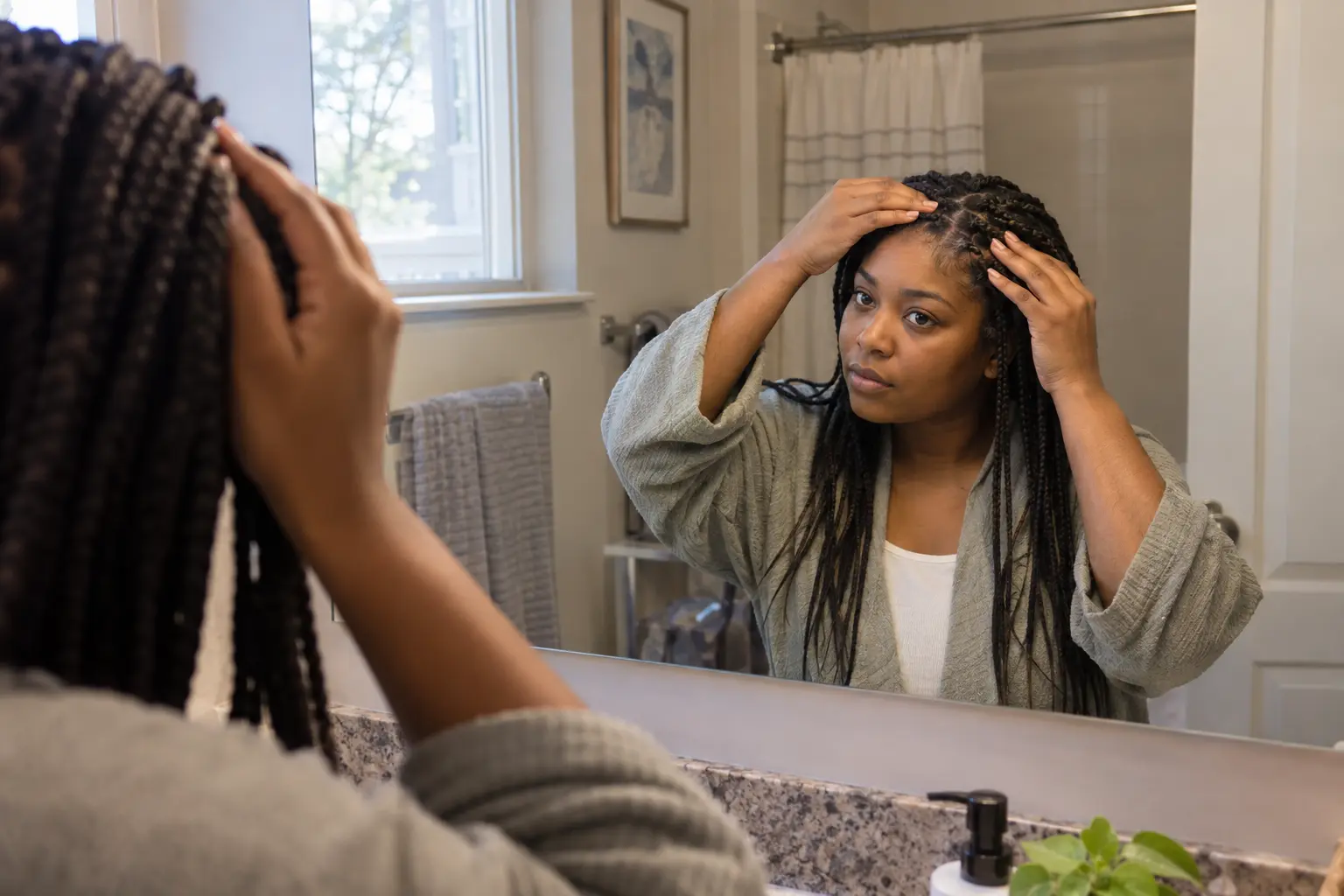
A daily routine should not begin with a product. It should begin with information. One quiet minute can help you avoid layering moisture over sweat, pulling an already-sensitive hairline tighter or fixing a style that was doing perfectly well on its own.
Use four signals: comfort, moisture, residue and tension
- Comfort: Does the scalp feel calm, itchy, tender, hot or unusually sensitive?
- Moisture: Do the exposed roots or loose ends feel flexible, normal, rough or brittle?
- Residue: Do you see flakes, sweat, lint or a visible product film?
- Tension: Are edges, parts or one section being pulled by a ponytail, bun, hat or the weight of the style?
Check with clean fingertips and good light. Look at the hairline, two or three parts, the crown and the nape. You do not need to disturb every braid or loc.
Choose one lane—not five products
Green: comfortable and balanced
If the scalp feels calm, the hair feels flexible and there is no obvious residue, leave it alone. Smooth loose strands with clean hands, choose a low-tension shape and continue your day. Doing nothing is a valid hair-care decision.
Yellow: one small need
If the hair feels slightly dry but the scalp is clean, use a light, targeted amount of moisture on the exposed hair rather than soaking the entire style. If the roots are damp from sleep or activity, blot and let them dry before covering. If one area feels pulled, release that section instead of tightening everything else.
Red: stop and reassess
Persistent pain, swelling, sores, unusual hair loss or worsening irritation are not signals to hide under more product or a tighter style. Remove pressure and seek guidance from an appropriate licensed professional when a health concern may be involved.
Adjust the check for your style
- Braids and twists: focus on the hairline, parts, buildup at the base and the weight of any updo.
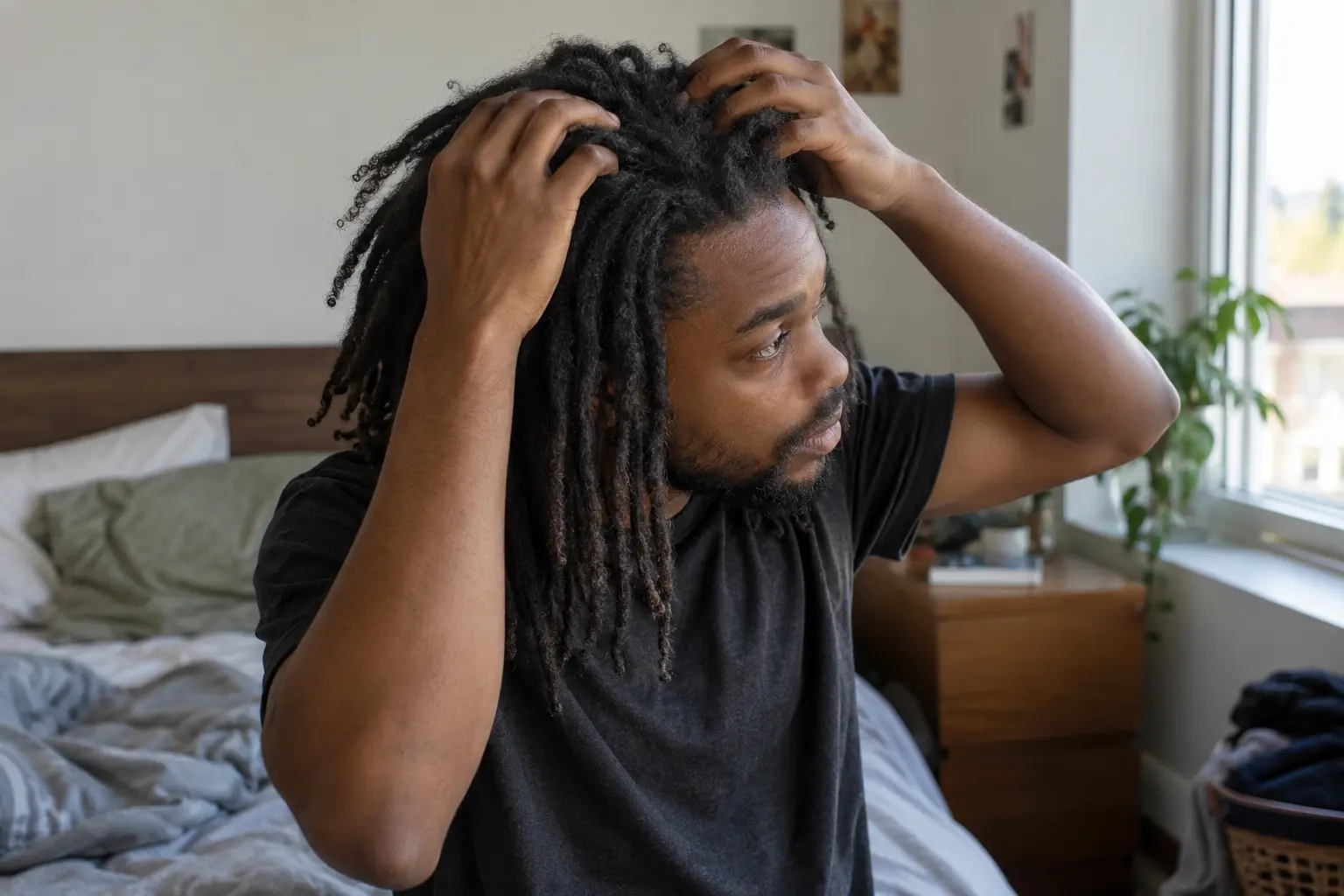
- Locs: check root comfort, trapped dampness, visible lint and whether a tie is repeatedly pulling the same locs.
- Loose natural hair: feel the ends first; they often reveal dryness or friction before the roots do.
- Children’s hair: ask the child how it feels. A neat style should not depend on ignoring discomfort.

Turn one minute into a useful pattern
One dry day may be weather. The same dry area for five days may point to friction, product placement or a routine that needs adjusting. Record only what matters: comfort, moisture, buildup and what you changed. After a week, you can stop guessing.
Try it now: use the free Daily Hair & Scalp Check-In to receive a short routine and see your seven-day pattern privately on your device.
What did your hair ask for today?
Was the answer moisture, drying, less tension—or simply “leave me alone”? That answer is more valuable than following a product calendar that cannot feel your hair. If your current style repeatedly creates the same problem, send Hermi Luxe Hair your photos and explain what you are noticing before your next appointment.
This article provides general styling and maintenance information. Persistent pain, sores, swelling, hair loss or scalp concerns should be assessed by an appropriate licensed health professional.