
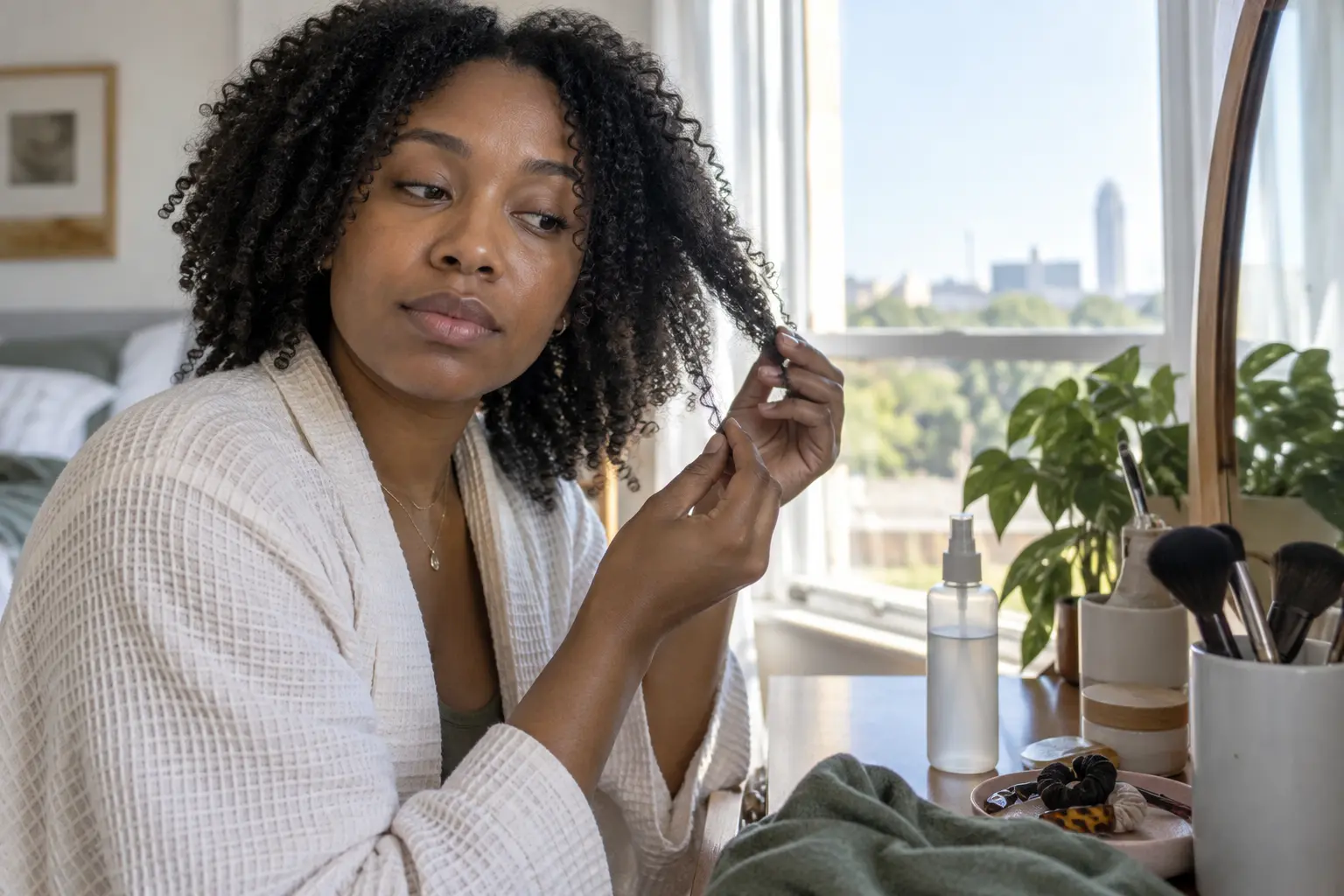
The question is not “Did I moisturize today?” The better question is “What is dry, what is damp and what already has enough product?” Treating all three the same is how a simple routine becomes sticky, flaky and hard to understand.
First identify what you are feeling
- Dry hair: exposed roots or ends feel rough, rigid or less flexible than usual.
- Dry-feeling scalp: the skin feels tight, but adding oil is not automatically the answer; residue or irritation can create a similar sensation.
- Dampness: sweat, shower steam or incomplete drying leaves roots cool or moist.
- Buildup: hair or scalp feels coated, sticky or visibly flaky, especially where products are repeatedly placed.
If you cannot tell, press a clean fingertip or tissue gently at the roots. Moisture, oiliness and dry roughness leave different clues. Avoid scratching to “test” the scalp.
The minimum-effective-step rule
Begin with the lightest action that addresses the actual signal. You can always add a little more; removing layers from braids, twists or locs is harder.
- If hair feels balanced, do nothing.
- If only exposed hair feels slightly dry, lightly dampen that area and reassess.
- If it still feels rough, smooth a very small amount of suitable leave-in care over the hair—not automatically across the entire scalp.
- If roots are sweaty or damp, blot and dry before deciding whether any product is needed.
- If residue is visible or persistent, plan appropriate cleansing instead of covering it with another layer.
How much is “a little”?
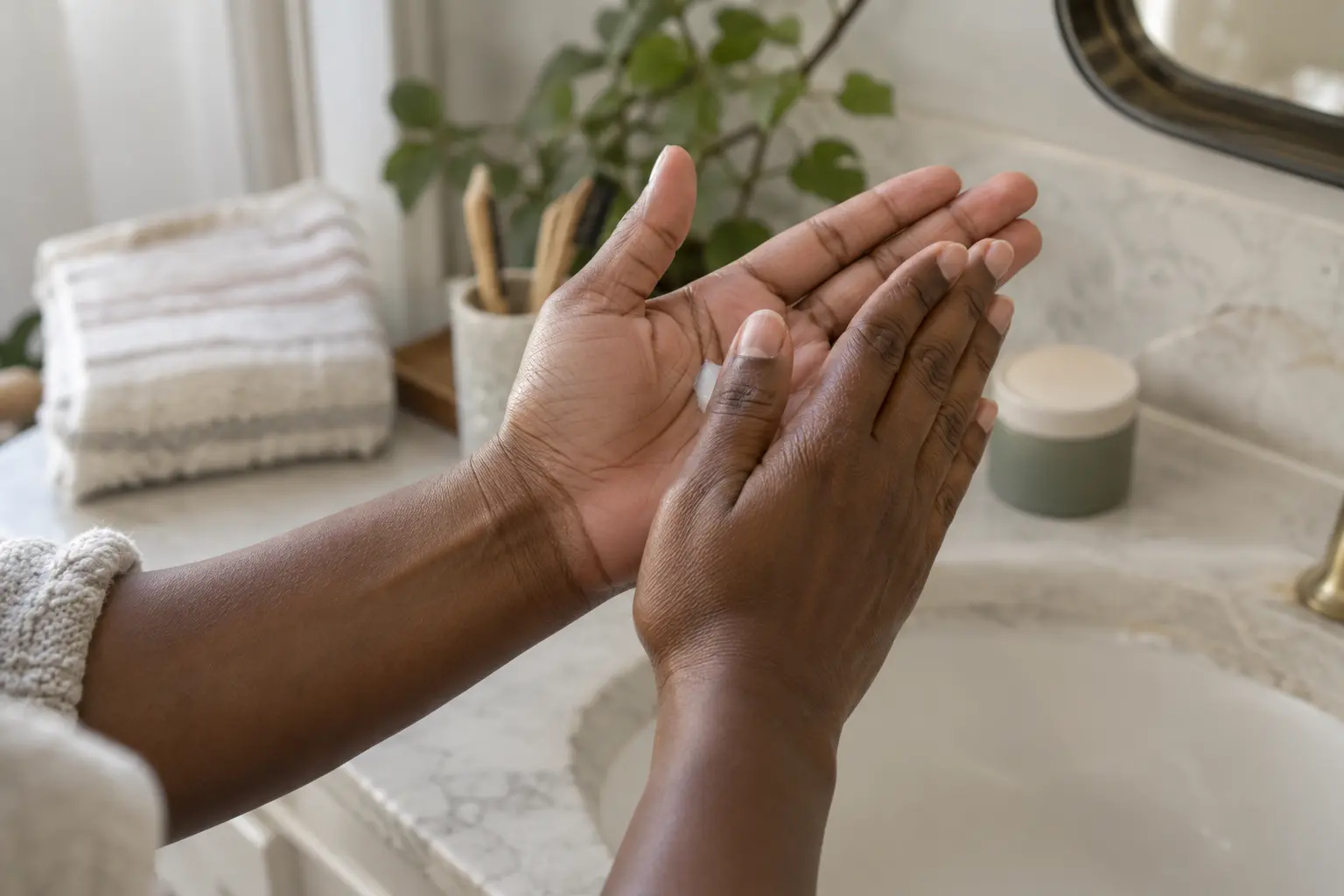
Start with less than your habit tells you to use. Spread the product fully across your palms before touching the hair. Work on one section, then wait a moment and feel again. The goal is flexibility and comfort—not a visible coating or artificial shine.
Braids and extension styles
Concentrate on your natural hair at the roots and any exposed ends. Repeatedly coating the full extension length can collect lint without solving scalp dryness.
Locs
Prioritize complete drying and light application. Heavy layers can remain inside dense locs longer than they remain on loose hair.
Loose curls, coils and twists
Divide the hair so moisture reaches the section that needs it. A dry outer layer does not always mean every strand requires another full-head application.
Change the order after sweat
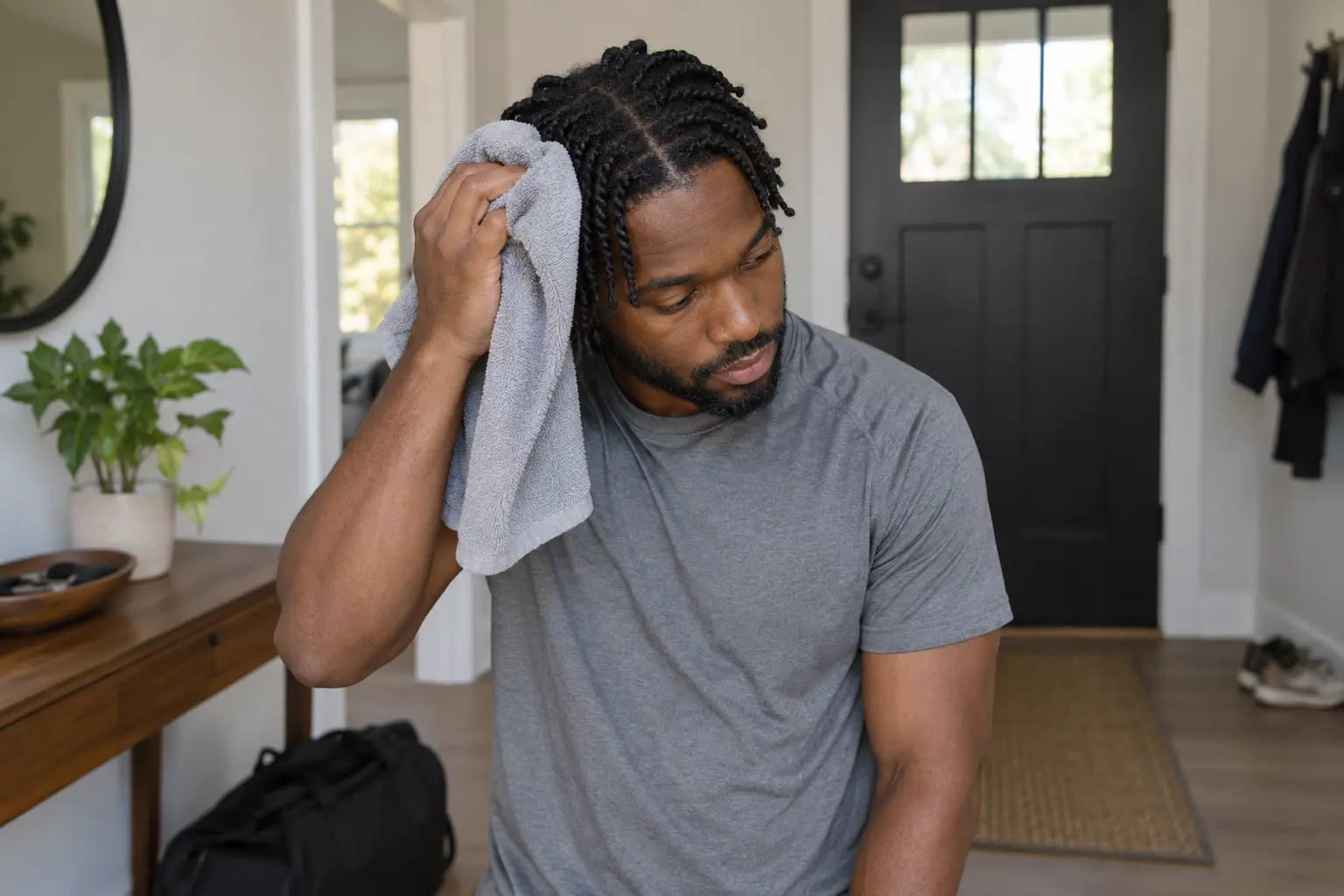
After exercise, a warm commute or active play, do not immediately seal damp roots under oil, a hat or a bonnet. Blot without rubbing, separate dense sections gently and allow airflow. If the scalp needs cleansing, moisture products are not a substitute.
Let Omaha weather influence—not control—the routine
Indoor heat and cold wind may increase dryness; summer humidity and activity may increase dampness. Weather changes the questions you ask, but the hair and scalp still make the final decision.
Build the right sequence: the free Protective Style Care Coach turns your style, comfort and routine into a short daily checklist.
Which mistake sounds most familiar?
Adding product because it is “moisture day,” mistaking sweat for dryness, or using the same amount on every style? Pick one habit to change for seven days and observe the difference. If your style makes the scalp hard to keep comfortable, request a personal photo quote and include that concern.
This article provides general styling and maintenance information. Persistent pain, sores, swelling, hair loss or scalp concerns should be assessed by an appropriate licensed health professional.