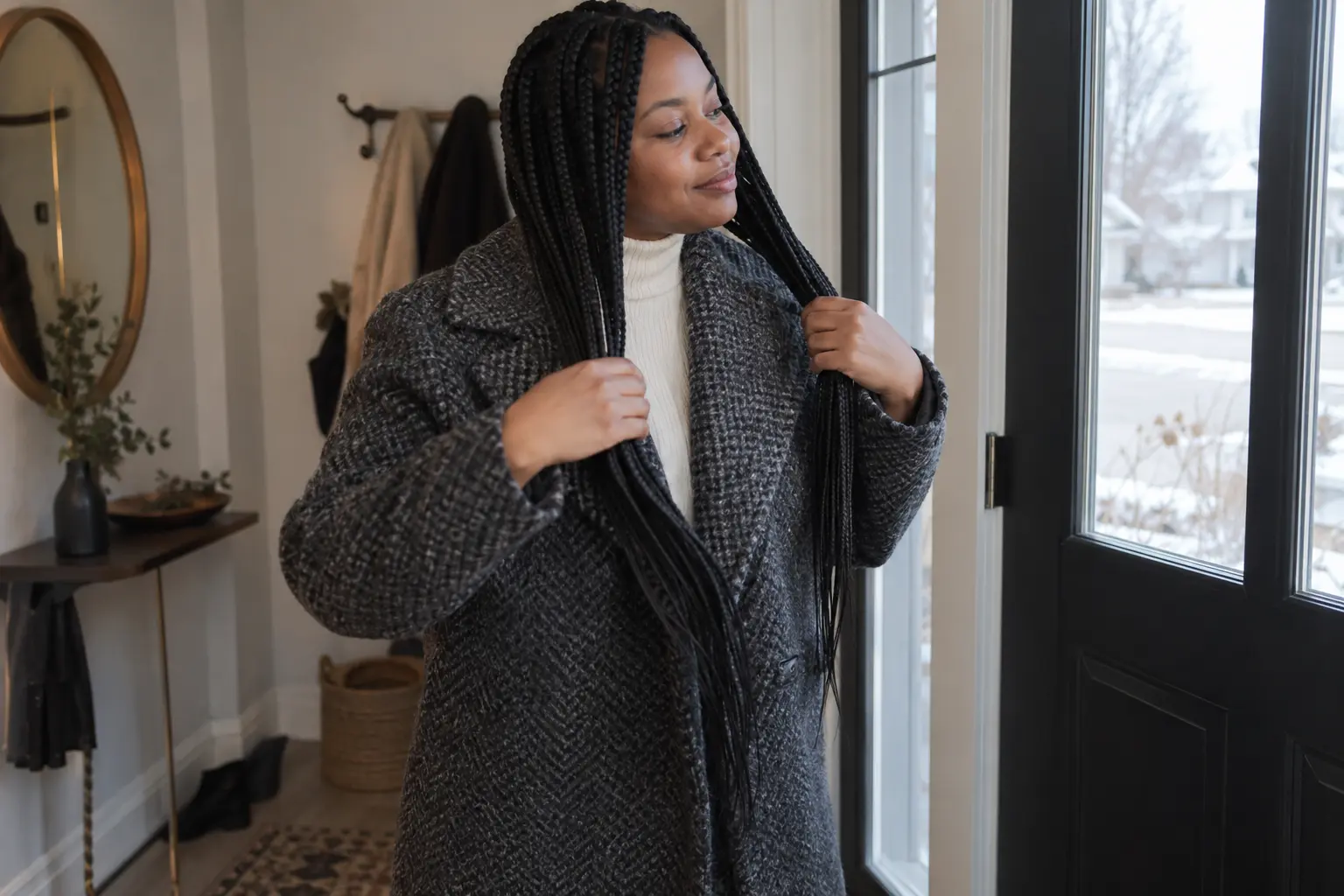
Hair rarely announces, “Your left coat collar has been rubbing me for three weeks.” It shows a pattern instead: one fuzzy section, loose braid ends, lint in the same locs or breakage near the nape. The fastest fix is to find the repeated contact point.
Start with the location of the change
- Nape: coat collars, hoodies, scarves, necklaces and high-backed chairs.
- One side: car headrests, sleeping position, phone placement or repeatedly leaning on one hand.
- Crown: snug hats, helmet liners or repeated high buns.
- Ends: rough sweaters, bag straps, seat belts and hair trapped behind the back.
- Children’s styles: backpack straps, coat hoods, classroom carpet time and active play.
The location is evidence. Match it to the surfaces your hair touches most often before assuming the entire routine has failed.
Coats, hoodies and scarves
Omaha layers can be practical and rough. Before pulling on a textured coat, bring long braids, twists or locs forward or place them fully inside a smooth protective layer. Avoid leaving half the style trapped under a collar where every head turn creates rubbing.
Quick exit check
- Is any hair caught under the collar or hood?
- Are the same edges carrying the weight of the style?
- Will a scarf rub directly against loose ends for the entire trip?
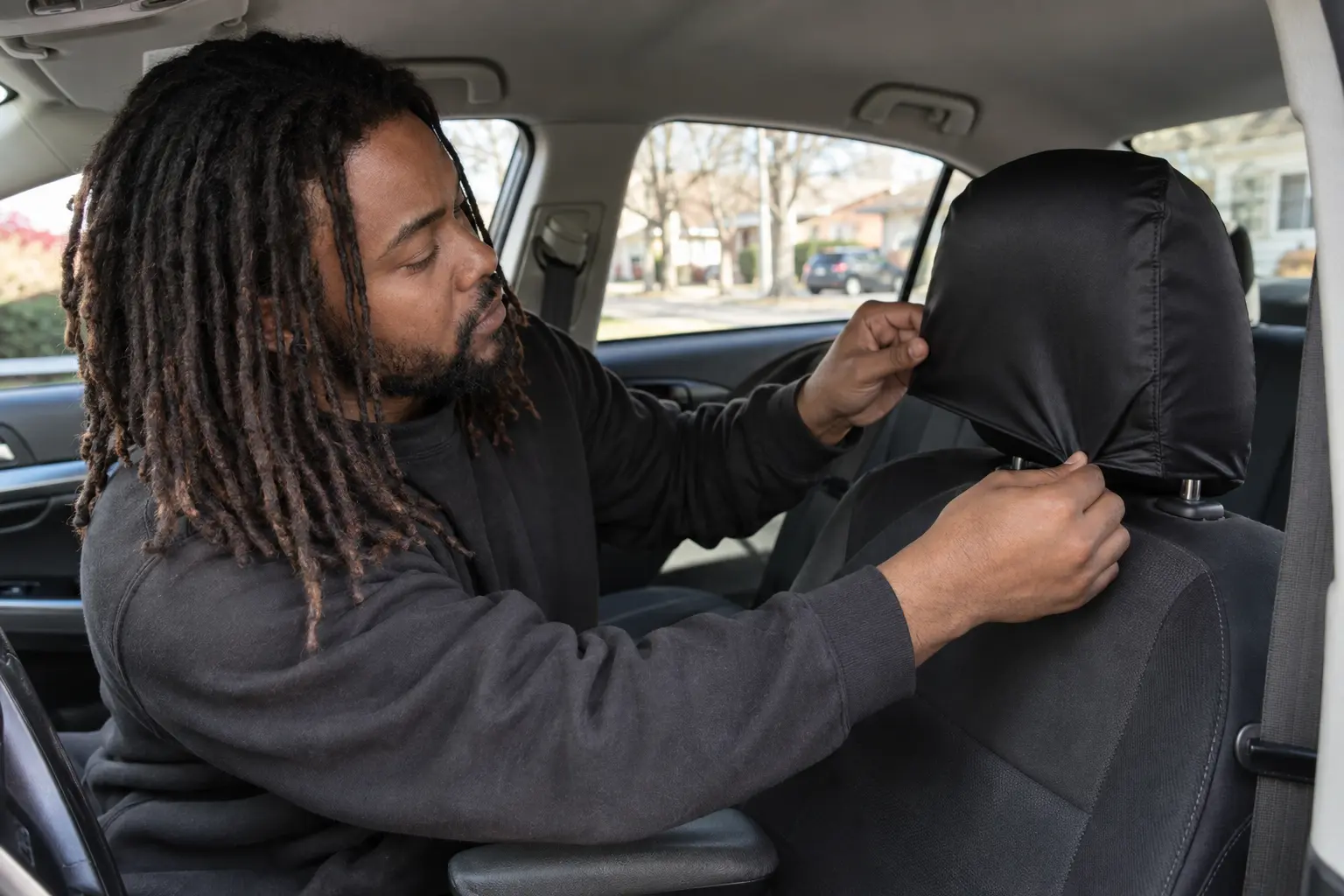
Your car may explain the “bad side”
Commuters can press the same part of the head against a fabric headrest every day. Keep hair from being pinned between your back and the seat, change where longer sections rest, or use a clean, secure smooth cover that does not interfere with the headrest’s safety or position. Make changes only while parked.
Hats, helmets and workwear
A protective item still needs to fit correctly. Do not loosen safety equipment to protect a hairstyle. Instead, use only liners allowed by the equipment manufacturer, keep the liner clean and avoid placing a bulky knot where it changes the fit. After removal, check the exact pressure areas before restyling.
Backpacks and shoulder bags
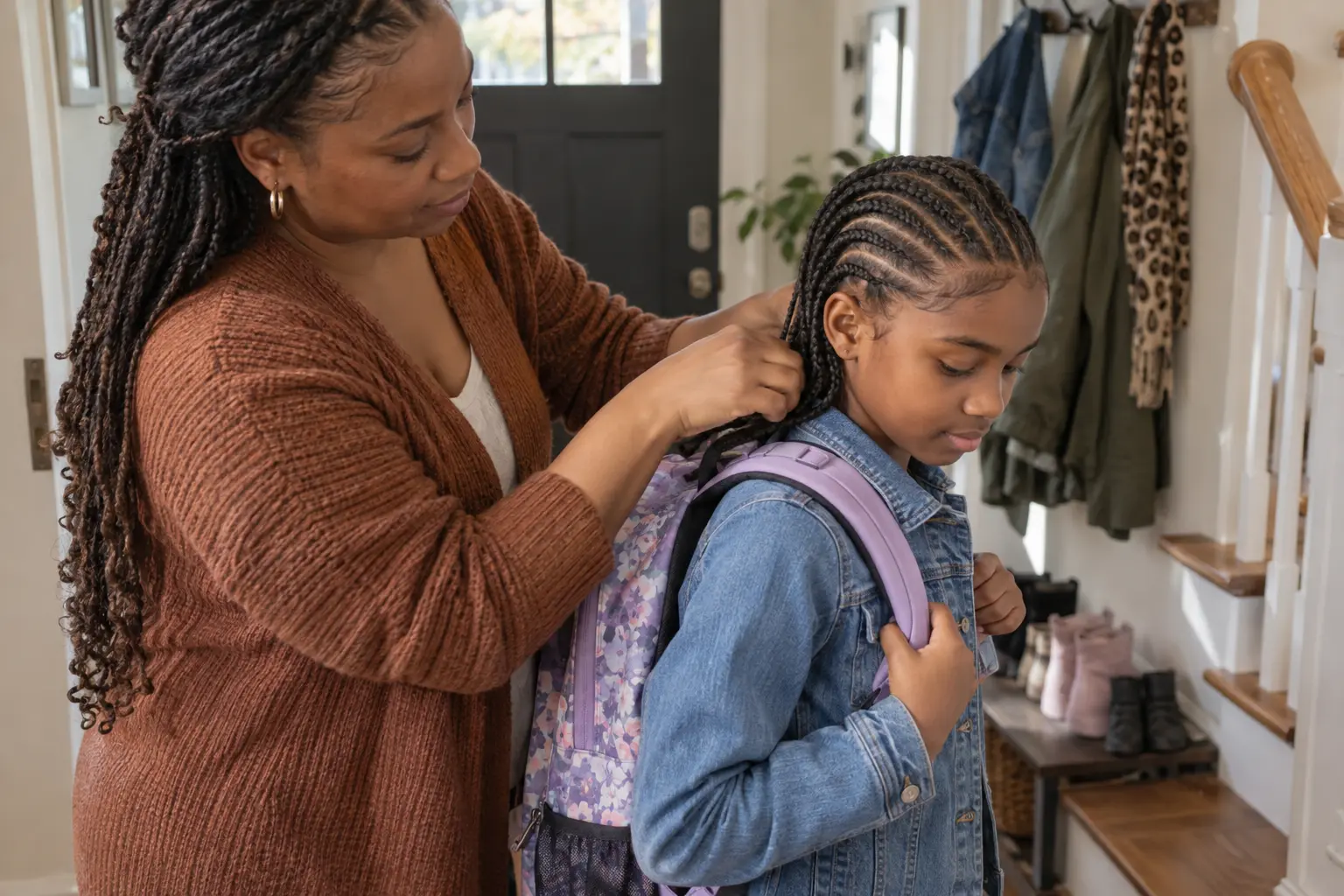
Long hair can slip under a strap without anyone noticing. Move braids, twists or loose hair clear before lifting the bag. For children, make the hair check part of the same routine as checking zippers and lunch boxes—quick, calm and consistent.
The 24-hour friction audit
Tomorrow, notice every place your hair rests for more than a few minutes: pillow, sofa, office chair, driver’s seat, coat, hat and bag. You do not need to eliminate contact. Change the roughest repeated contact and observe that area for a week.
Make the fix style-specific: open the free Protective Style Care Coach and add your biggest friction point to today’s routine.
Which surface touches your hair the most?
Is it the car seat, hoodie, pillow, work hat or backpack? Most people have one answer they never considered. Once you find yours, the solution may be easier than buying another product. If a style’s length or weight makes daily friction difficult to manage, send photos with your next quote request so it can be considered during planning.
This article provides general styling and maintenance information. Persistent pain, sores, swelling, hair loss or scalp concerns should be assessed by an appropriate licensed health professional.