
A retwist organizes new growth at the roots and refreshes the appearance of established locs. It should support a healthy-looking, manageable foundation without turning every loose hair into an emergency. The right schedule is personal.
Typical retwist timing
Many established-loc clients schedule maintenance about every four to eight weeks. Newer locs may need a more structured early schedule, while mature locs can sometimes go longer. Growth rate, loc size, scalp condition, exercise, washing frequency and preferred finish all matter. A calendar alone cannot determine what your hair needs.
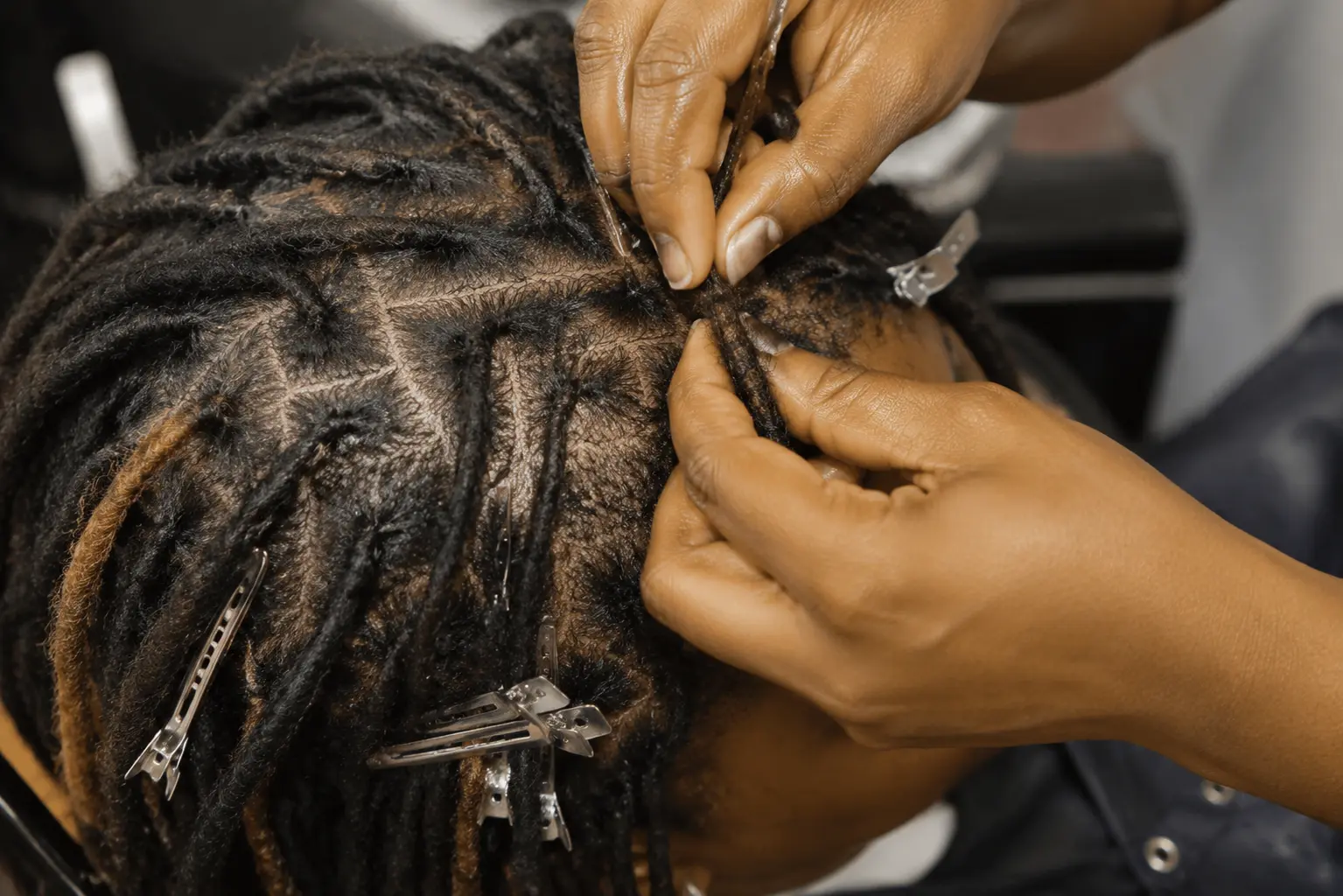
What retwists cost in Omaha
Current Omaha-area listings commonly place a basic retwist around $70 to $130, while wash-and-retwist services, long locs, microlocs and retwist-plus-style appointments can reach $115 to $185 or more. Hermi Luxe Hair lists a standard retwist from $95 and a retwist with a simple style from $125. Final price depends on loc count, length, density, new-growth condition, buildup, time since the last maintenance and the requested finish.
What a routine appointment should address
The service should separate roots that have begun to marry, organize the new growth with a consistent method and preserve the existing loc structure. When cleansing is included, the scalp and locs need enough drying time. Styling is a separate step and may involve barrels, two-strand loc twists, a ponytail or a simple updo.

How to prepare for a retwist
Follow the confirmed cleansing instructions. If washing is not part of the service, arrive with clean hair and a scalp free from heavy grease or wax. Remove complicated accessories before the appointment. Tell the stylist about thinning areas, weak locs, recent color, extensions, interlocking, crochet maintenance or a previous retwist method so the new service does not conflict with earlier work.
When maintenance becomes correction
Long gaps between appointments can create extensive root marrying, uneven sections or compacted buildup. Locs that are thinning, partially detached or combined incorrectly may require repair rather than a standard retwist. That work should be assessed before the appointment because time and technique vary widely. A starting price for routine maintenance cannot responsibly cover every corrective situation.
Can you retwist too often?
Yes. Repeatedly tightening the root for appearance alone can create avoidable tension and manipulation. A fresh retwist should not require severe pulling, persistent pain or a scalp covered in bumps. If comfort changes during the service, communicate immediately. Long-term consistency comes from balanced maintenance, not maximum tightness.
Care between appointments
Cover locs at night with satin or another smooth material. Keep the scalp clean according to your routine, dry the locs thoroughly after moisture exposure and avoid layering heavy products. Separate roots gently only if your stylist has shown you how. Do not attempt major repairs with household glue, random thread or aggressive twisting.
Retwist, interlock or crochet maintenance?
These methods are not interchangeable. Palm rolling or comb retwisting organizes new growth differently from interlocking, and crochet work may be used for instant-loc construction or specific repair. Tell your stylist what method has already been used. Changing systems without a clear reason may alter the root pattern or create inconsistent results.
Persistent pain, sores, odor, inflammation or unexplained hair loss requires appropriate professional assessment. Styling information is not medical advice.