
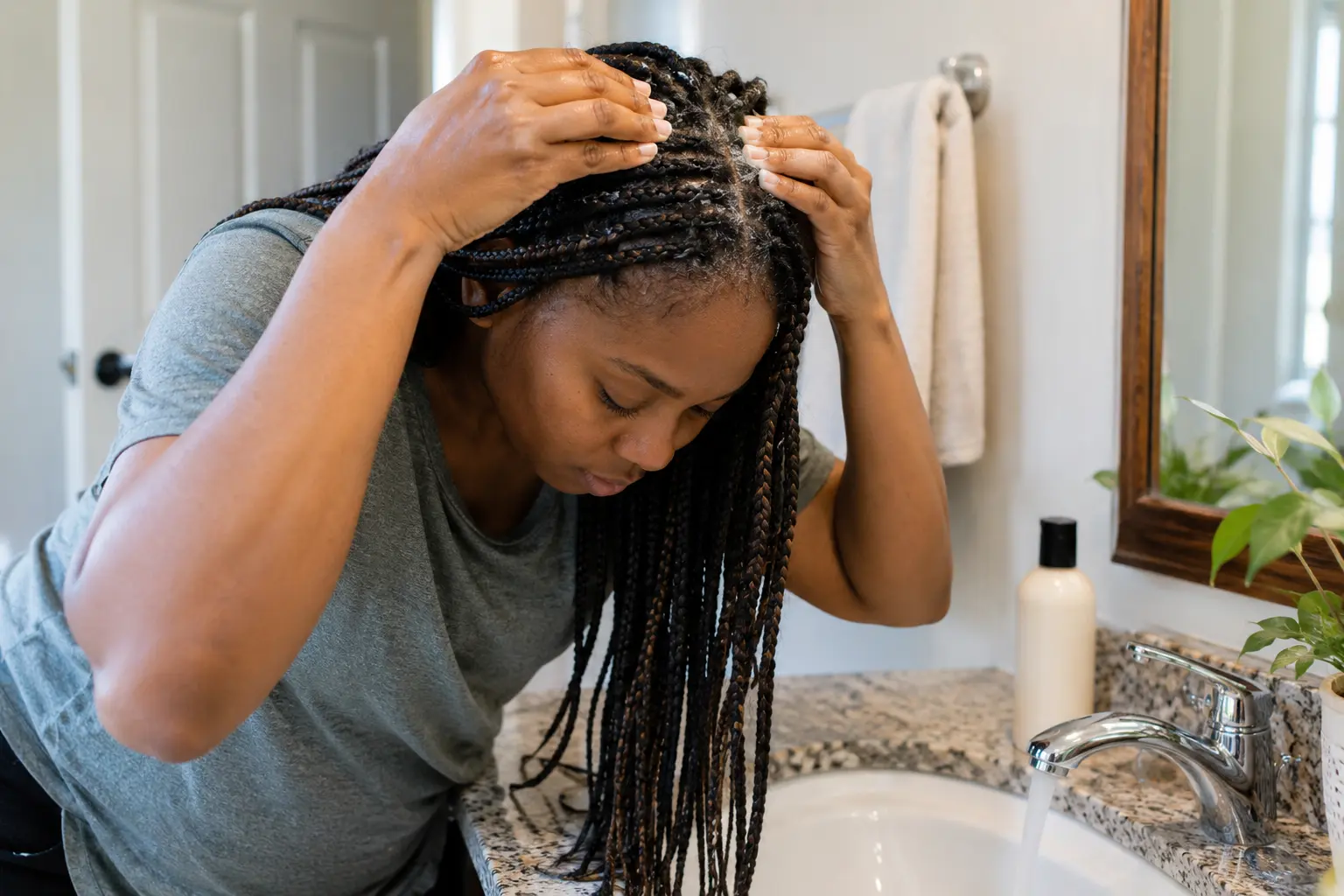
You do not have to choose between a clean scalp and neat braids. Frizz usually increases when the hair is rubbed, piled, twisted or handled in every direction. A controlled scalp-first wash can remove sweat and residue while keeping the braid pattern more organized.
How often should you wash braids?
There is no single calendar that fits every person. Your scalp, activity, product use, weather, braid type and stylist’s instructions all matter. Cleanse when sweat, visible residue, oiliness or odor shows that the scalp needs it rather than repeatedly covering those signals with more product.
The American Academy of Dermatology advises washing Black hair weekly or every other week as a general starting point to limit product buildup, while its extension-care guidance says to wash as often as your hair type needs. Treat those as reference points—not a diagnosis or a rigid rule for every installed style.
Before water: check the style in two minutes
- Look for weak or slipping braids. Washing cannot repair an attachment that is already hanging from very little natural hair.
- Release tight updos. Let the braids hang in their natural direction before wetting them.
- Separate decorations. Remove accessories that can snag, rust or trap cleanser unless their care instructions say they are water-safe.
- Plan enough drying time. Do not start immediately before bed, putting on a helmet or leaving for work under a hat.
The seven-step braid wash
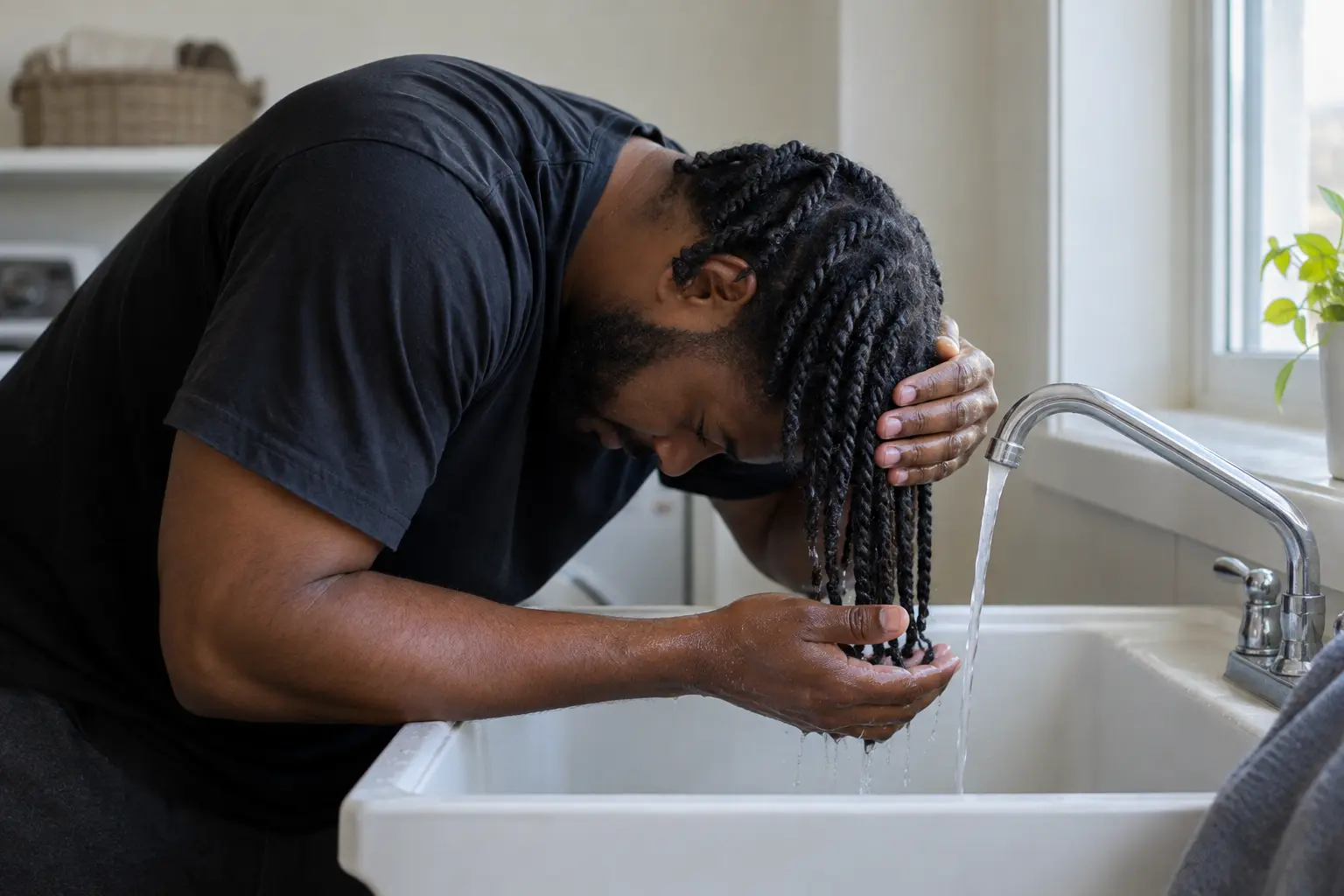
- Wet in the direction of the braids. Use comfortable—not very hot—water. Point the braids downward so water follows the pattern instead of bunching the lengths on top of the head.
- Apply cleanser to the scalp. Place a gentle shampoo along accessible parts. Follow the product label; do not improvise a dilution if the label or your stylist advises against it.
- Massage with fingertip pads. Use small, controlled movements on the scalp. Do not rake with fingernails or vigorously rub the braided lengths together.
- Let the rinse travel downward. The American Academy of Dermatology recommends massaging shampoo into the scalp and letting it flow through the hair rather than rubbing shampoo through the lengths.
- Rinse until the water is clear. Move section by section. Product left at the roots can feel like new buildup after the style dries.
- Condition only as appropriate. Follow the conditioner label, your stylist’s instructions and the extension material’s care guidance. Use enough to support your natural hair without leaving a coating the style cannot release.
- Rinse once more, then stop handling. Squeeze sections gently between your palms. Do not wring, twist or brush the installed braids.
Drying matters as much as washing
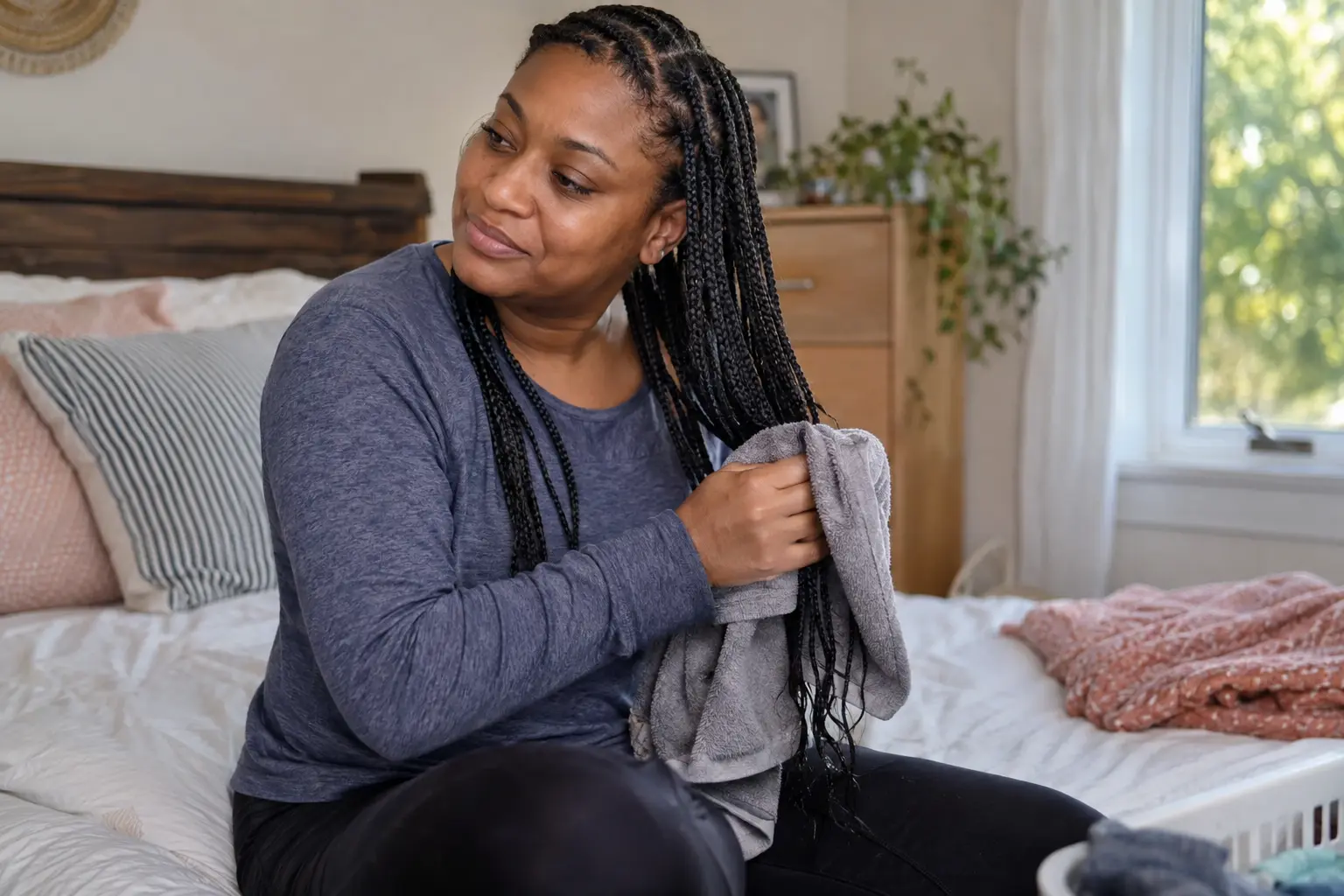
Press a clean microfiber towel around sections to absorb water; do not rub back and forth. Let the braids hang loose with airflow around the roots and lengths. If you use a dryer, follow the extension material’s instructions and choose the lowest effective heat. Dense, long or wrapped styles can remain damp inside even when the surface feels dry.
Check three places before covering the style: the crown, the nape and the thickest braid bundle. If any area still feels cool and damp, keep drying. Avoid putting wet roots into a bun, bonnet, hat or pillow.
How to reduce frizz after washing
- Keep water, cleanser and hands moving in the braid’s direction.
- Touch the scalp deliberately instead of scrubbing every visible part at once.
- Blot rather than rub with a towel.
- Wait until the style is fully dry before arranging it again.
- Use only the finishing care that suits your natural hair and the installed material.
A little surface fuzz after cleansing is normal. A protective style does not have to look untouched to be cared for responsibly. If preserving a perfectly slick appearance requires avoiding needed cleansing, the appearance is asking too much of the scalp.
Three mistakes that create a harder wash day
Using oil as a substitute for cleansing
Oil can add another layer, but it does not remove sweat, lint or accumulated styling product. Use the moisturize-or-wait guide when dryness, dampness and residue are difficult to tell apart.
Scratching first, washing later
Sharp tools and fingernails can injure the scalp. Persistent itching, sores, bleeding, swelling, pain or unexplained hair loss deserve assessment by an appropriate licensed health professional—not a more aggressive home wash.
Covering the style while it is still damp
Build drying time into the routine. After workouts, swimming or humid Omaha days, use the free Protective Style Care Coach to keep cleansing, drying and wear-time decisions in the right order.
What part of braid wash day gives you the most trouble?
Is it deciding when to wash, reaching the scalp, rinsing all the cleanser or getting the roots completely dry? Name the one step that usually goes wrong, then change only that part on your next wash day. A smaller experiment makes it easier to see what actually helped.
Sources and scope
This guide uses general hair-care recommendations from the American Academy of Dermatology’s Black hair care guidance, its advice on washing without unnecessary rubbing, and its extension-care recommendations. Always follow the directions for your products and extension material.
This article provides general styling and maintenance information and does not diagnose scalp or hair conditions. Persistent pain, sores, swelling, bleeding, hair loss or scalp concerns should be assessed by an appropriate licensed health professional.